Progressive Overload at Home: Maximizing Muscle Growth with Bodyweight and Minimal Equipment
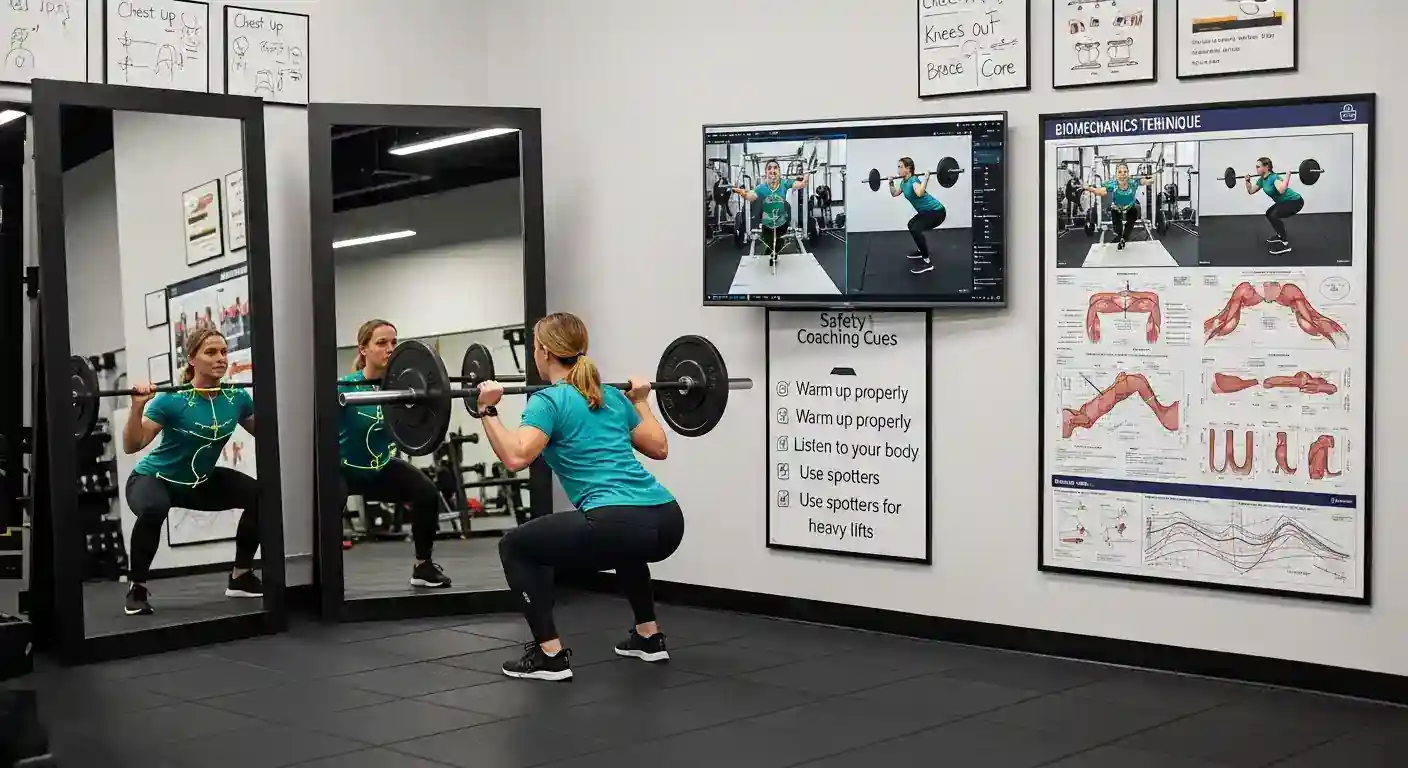
Building muscle often conjures images of heavy barbells and crowded gyms, but the fundamental principle for muscle growth – progressive overload – is equally effective and achievable right in your own home. Whether you're working with just your body weight or a few pieces of minimal equipment, understanding and applying progressive overload is the key to continuously challenging your muscles and stimulating adaptation. This comprehensive guide will show you how to transform your home workouts into powerful muscle-building sessions, ensuring your efforts lead to tangible gains.
Key Points for Progressive Overload at Home:
- Consistency is paramount: Regular training sessions are non-negotiable for muscle adaptation.
- Master the variations: Bodyweight exercises offer a vast spectrum of difficulty levels.
- Beyond reps and sets: Explore time under tension, pauses, and range of motion for overload.
- Leverage minimal equipment: Bands, dumbbells, or a pull-up bar can significantly expand your options.
- Track and adapt: Monitor your progress to ensure continuous challenge and prevent plateaus.
Understanding Progressive Overload: The Core of Muscle Growth
Progressive overload is the most critical principle for building muscle and increasing strength. It simply means gradually increasing the stress placed on the musculoskeletal system over time. Your muscles adapt to a given stimulus, so to continue growing, you must continually challenge them with greater demands. Many believe this solely means adding more weight, but when it comes to progressive overload at home, the strategies are far more diverse and creative.
This principle is rooted in how our bodies respond to stress. When muscles are subjected to a challenging stimulus, they undergo microscopic damage and then repair themselves stronger and larger to better handle that stress in the future. Without this escalating challenge, your muscles have no reason to adapt further, leading to stagnant progress. Applying this at home means finding innovative ways to make your bodyweight or minimal equipment exercises harder.
The Science Behind Progressive Overload for Home Workouts
Even without a rack of dumbbells, your muscles respond to the same stimuli. Research, such as a late 2023 review in the Journal of Applied Physiology, reinforces that high-intensity bodyweight training can elicit similar hypertrophic responses to weighted training, provided the intensity and volume are matched through progressive overload. The key is to find ways to increase the relative intensity or mechanical tension on the muscle. This can involve increasing the amount of work done, the difficulty of the movement, or the time the muscle spends under tension.
It’s about making your body think it needs to grow stronger, even if the external load isn't changing drastically. For instance, moving from standard push-ups to decline push-ups significantly increases the load on your upper body, despite using the same body weight. This nuanced approach makes progressive overload at home not only possible but highly effective for muscle gain.
Bodyweight Progression Techniques for At-Home Gains
When you're limited to bodyweight, the concept of progression shifts from adding plates to altering leverage, stability, and control. These techniques are fundamental for bodyweight muscle growth.
- Increase Repetitions or Sets: The most straightforward method. If you can comfortably do 10 push-ups, aim for 12, then 15. Once you hit a target (e.g., 20 reps), it's time to move to a harder variation.
- Decrease Rest Time: Shortening the rest period between sets increases the metabolic stress on your muscles, contributing to hypertrophy.
- Improve Form and Range of Motion: A deeper squat or a full-range push-up where your chest touches the floor is harder and more effective than partial reps. Mastering impeccable form is a progression in itself.
- Slow Down the Movement (Time Under Tension): Performing repetitions slower, especially the eccentric (lowering) phase, dramatically increases the time your muscles spend under tension. Try a 3-second lowering phase for squats or push-ups.
- Add Pauses: Introducing a 1-2 second pause at the point of greatest tension (e.g., bottom of a squat, top of a pull-up) increases the demand on the muscle.
- Explosive Movements: Once basic strength is established, adding plyometric versions (e.g., clap push-ups, jump squats) can increase power and muscle fiber recruitment.
- Unilateral Training: Performing exercises one limb at a time (e.g., single-leg squats, one-arm push-ups) significantly increases the load on the working limb. This is a powerful technique for home workout gains. For more foundational exercises, consider our guide on Bodyweight Training for Beginners: A Comprehensive Guide.
Leveraging Minimal Equipment for Enhanced Overload
While bodyweight is powerful, a few affordable pieces of equipment can significantly expand your options for progressive overload.
- Resistance Bands: These offer accommodating resistance, meaning the tension increases as the band stretches. They're excellent for adding difficulty to squats, push-ups, pull-aparts, and even assisted pull-ups.
- Dumbbells or Kettlebells (Adjustable Recommended): Even light dumbbells can be used for goblet squats, lunges, rows, and overhead presses, allowing for traditional progressive loading. Adjustable sets are cost-effective for minimal equipment strength.
- Pull-up Bar: A game-changer for back and biceps development. Once you master basic pull-ups, progress by adding reps, decreasing rest, or adding a weighted backpack.
- Gymnastics Rings or Suspension Trainer: These provide instability, which forces greater core activation and makes exercises like push-ups, rows, and dips far more challenging.
Advanced Strategies for Progressive Overload at Home
To truly maximize muscle growth with progressive overload at home, it's essential to move beyond basic progressions and integrate more sophisticated techniques.
Unilateral Training and Time Under Tension
As mentioned, unilateral movements are incredibly effective. A single-leg squat (pistol squat) places nearly twice your body weight on one leg. Similarly, staggered stance push-ups or single-arm push-ups elevate the challenge. Focusing on the mind-muscle connection during these exercises ensures the target muscle is doing the work. According to experts like those at the American Council on Exercise in their 2024 publications, the neurological drive during unilateral work enhances strength and stability across the entire body.
Time under tension (TUT) is another potent tool. Instead of just counting reps, focus on how long your muscles are actively working during a set. For example, a set of 10 push-ups with a 4-second eccentric (lowering) phase and a 1-second pause at the bottom will deliver significantly more TUT and mechanical tension than a quick 10 reps. This approach maximizes the hypertrophic stimulus, even if the "weight" isn't changing.
Mastering Form and Mind-Muscle Connection
While not a direct "overload" in the traditional sense, continually refining your exercise form is a critical part of home progression. Cleaner, more controlled movements recruit the target muscles more effectively, prevent injury, and allow for a stronger mind-muscle connection. This connection is vital; it means actively feeling the muscle work through its full range of motion. A study published in the International Journal of Exercise Science in early 2024 highlighted that individuals focusing on this connection showed superior muscle activation and growth, even with lighter loads. Don't just go through the motions; feel the muscle contract and stretch with every rep.
Planning Your Progressive Overload Home Program
Effective planning is crucial for consistent progress. Your home workout program should be structured to allow for progressive overload.
Tracking Progress and Adapting Your Routine
You can't progress if you don't know where you started. Keep a workout journal to record:
- Exercises performed: Specific variations (e.g., incline push-ups vs. standard).
- Sets and Reps: For each exercise.
- Tempo/Pause: Note if you used slow eccentrics or pauses.
- Rest Times: Between sets.
- Perceived Exertion (RPE): How hard the set felt on a scale of 1-10.
Review your journal weekly or bi-weekly. If you're consistently hitting your target reps or time for an exercise, it's time to implement a progression. This could be moving to a harder variation, adding a band, decreasing rest, or slowing down the tempo. The key is to continually provide a new challenge to your muscles, ensuring ongoing home muscle growth.
Nutrition and Recovery: Fueling Your Home Muscle Growth
No amount of progressive overload will yield results without proper nutrition and adequate recovery. These are pillars of muscle building, whether you're in a gym or training at home.
- Protein Intake: Consume sufficient protein (around 0.7-1 gram per pound of body weight) to support muscle repair and growth. Focus on lean sources like chicken, fish, eggs, legumes, and protein supplements if needed.
- Caloric Surplus: To build muscle, you generally need to consume slightly more calories than you burn. This surplus provides the energy and building blocks for new muscle tissue.
- Hydration: Water is essential for all bodily functions, including muscle performance and recovery.
- Sleep: Aim for 7-9 hours of quality sleep per night. This is when your body does most of its repair and recovery, releasing crucial growth hormones.
- Active Recovery: Light activities like walking or stretching on rest days can aid blood flow and reduce muscle soreness.
To truly maximize your muscle gains, understanding the role of nutrition is paramount. Dive deeper into Nutrition Strategies for Muscle Growth at Home.
FAQ Section
Can you really build significant muscle with progressive overload at home?
Absolutely! The human body doesn't differentiate between resistance from a barbell or resistance from gravity and clever body positioning. By continually increasing the challenge of your bodyweight exercises through variations, tempo, range of motion, and minimal equipment, you create the necessary stimulus for muscle hypertrophy. Consistency, proper technique, and intelligent progression are far more important than the location or type of equipment.
How often should I increase the difficulty of my home workouts?
The frequency of increasing difficulty depends on your current strength level, recovery, and the specific progression strategy you're using. For beginners, you might progress every 1-2 weeks by adding reps or decreasing rest. As you become more advanced, moving to a harder exercise variation or integrating new techniques might occur every 3-4 weeks. Listen to your body and ensure you're recovering adequately before adding more stress.
What if I hit a plateau with bodyweight exercises?
Plateaus are common. When you hit one, it's a sign that your body has fully adapted to the current stimulus. Re-evaluate your training log and consider a different form of progression. This could mean switching up your exercise variations, increasing time under tension, adding pauses, incorporating unilateral work, or using resistance bands. Sometimes, a deload week (reducing volume or intensity) can also help your body recover and break through the plateau.
Do I need any equipment at all for progressive overload at home?
While a few pieces of minimal equipment (like resistance bands or a pull-up bar) can greatly expand your options, you don't strictly need them. Dedicated bodyweight practitioners can achieve incredible strength and muscle using only their body. The key is creativity in exercise variations, leveraging different angles, leverages, and movement speeds to continually challenge your muscles. Equipment merely offers additional avenues for progressive overload.
Conclusion
Progressive overload is not an exclusive domain of the gym; it's a universal principle that governs muscle growth. By understanding and diligently applying the diverse strategies for progressive overload at home, you can build a strong, muscular physique without ever stepping foot in a traditional gym. Remember, consistency in your training, smart progression, mindful nutrition, and adequate recovery are the true ingredients for success.
Start implementing these techniques today, track your progress, and watch your body adapt and grow. Don't let perceived limitations hold you back from achieving your fitness goals at home. What's one new progression technique you'll try in your next home workout? Share your thoughts in the comments below! For more comprehensive programs and strategies, explore our Goal-Specific Training Programs category for tailored advice.